Table of contents
Open Table of contents
The State of AI
Go to Hugging Face right now. Search for “image segmentation.” You’ll find hundreds of models. Search for “text to speech.” Hundreds more. Search for “music generation.” Yep, hundreds.
There is literally an AI model for everything now. And most people don’t realize how deep this goes.
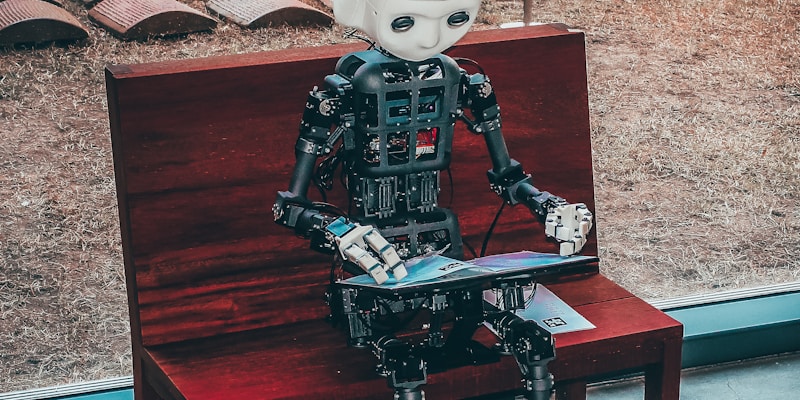
The Model Explosion
2020: A Few Big Models
GPT-3: 175 billion parameters
  - One model to rule them all
  - Cost: ~$12M to train
  - Access: API only (for most people)
2023: Many Specialized Models
Hugging Face Models: 500,000+
  - Image classifiers
  - Text generators
  - Code assistants
  - Music composers
  - Video generators
  - Audio transcribers
  - And everything in between
2025: AI Everywhere
AI in your phone:
  - Camera (night mode, portrait, scene detection)
  - Keyboard (predictive text, autocorrect)
  - Voice assistant (Siri, Google Assistant)
  - Photo organization (faces, places, objects)

AI in your browser:
  - Search (Google, Bing)
  - Translation (Chrome)
  - Writing assistant (Grammarly, Copilot)
  - Ad targeting (every ad you see)

AI in your car:
  - Lane detection
  - Object recognition
  - Adaptive cruise control
  - Parking assistance

AI in your home:
  - Smart speakers (Alexa, Google Home)
  - Security cameras (person detection)
  - Thermostats (learning your schedule)
Why This Happened
1. Transfer Learning
You don’t need to train a model from scratch anymore:
Old Way:
  Gather 1M labeled images
  Train model for weeks
  Get decent accuracy

New Way:
  Download pre-trained model (ResNet, BERT, etc.)
  Fine-tune on 100 images
  Get great accuracy in minutes
This is called transfer learning — leverage what a big model already learned, adapt it to your specific task.
2. Model Sharing
Hugging Face made model sharing as easy as GitHub:
# Download a model
from transformers import pipeline
classifier = pipeline("sentiment-analysis")
result = classifier("I love this product!")
# Output: [{'label': 'POSITIVE', 'score': 0.9998}]

# Share your model
model.push_to_hub("my-awesome-model")
3. Open Source Explosion
LLaMA (Meta): Open weights, runs locally
Mistral: Open weights, competitive with GPT-4
Stable Diffusion: Open weights, generates images
Whisper: Open weights, transcribes audio
When you give away powerful models, people build cool stuff.
4. Hardware democratization
2020: Training a large model required a data center
2023: Fine-tuning a model works on a gaming GPU
2025: Running inference works on your phone
The Model Categories
Language Models
Text Generation:
  - GPT-4, Claude, Gemini (closed)
  - LLaMA, Mistral, Qwen (open)

Code Generation:
  - GitHub Copilot
  - Cursor
  - CodeLlama

Translation:
  - Google Translate (uses Transformer)
  - DeepL
Vision Models
Image Classification:
  - ResNet, EfficientNet, Vision Transformer

Object Detection:
  - YOLO (real-time detection)
  - DETR (transformer-based)

Segmentation:
  - SAM (Segment Anything Model)
  - Mask R-CNN

Image Generation:
  - Stable Diffusion
  - DALL-E
  - Midjourney
Audio Models
Speech Recognition:
  - Whisper (OpenAI)
  - wav2vec 2.0 (Meta)

Text to Speech:
  - Bark (Suno)
  - Tortoise TTS
  - Bark

Music Generation:
  - MusicGen (Meta)
  - AudioCraft
Multimodal Models
Image + Text:
  - GPT-4 Vision
  - Gemini
  - LLaVA

Video + Text:
  - Gemini (processes video)
  - Video-LLaMA

Audio + Text:
  - Gemini (real-time audio)
  - GPT-4o
How Models Are Trained
The Pipeline
1. Data Collection
   └── Scrape internet, curate datasets

2. Pre-training
   └── Learn general patterns from massive data
   └── Weeks to months on thousands of GPUs

3. Fine-tuning
   └── Adapt to specific task
   └── Hours to days on single GPU

4. RLHF (optional)
   └── Align with human preferences
   └── Days to weeks

5. Deployment
   └── Optimize for inference
   └── Quantize, prune, distill
Data Is Everything
GPT-4 training data:
  - Books: ~100,000
  - Websites: ~100 billion pages
  - Code: ~1 trillion lines
  - Total: ~13 trillion tokens

Quality matters more than quantity:
  - Filter out spam, low-quality content
  - Deduplicate similar data
  - Balance across domains
What This Means for Developers
The Old Way
Developer:
1. Has a problem
2. Thinks about solution
3. Writes code
4. Tests
5. Deploys
The New Way
Developer:
1. Has a problem
2. Checks if there's a model for it
3. Integrates the model
4. Fine-tunes if needed
5. Deploys
Skills That Matter Now
1. Prompt Engineering
   - Knowing how to talk to models
   - Getting the right output

2. Model Selection
   - Choosing the right model for the job
   - Balancing cost, speed, quality

3. Integration
   - Connecting models to your app
   - Handling errors, retries, caching

4. Fine-tuning
   - Adapting models to your specific use case
   - Small datasets, specific domains
The Future
Models Will Get Smaller
2020: GPT-3 (175B params) — needs data center
2023: LLaMA (7-70B params) — needs gaming PC
2025: Phi-3 (3.8B params) — runs on phone
Small, efficient models that run anywhere are the future.
Models Will Get More Specialized
Instead of one giant model for everything, we’ll have specialized models for specific tasks:
Coding model: Writes perfect code
Medical model: Understands medical literature
Legal model: Analyzes legal documents
Art model: Creates beautiful art
Music model: Composes great music
The Model Layer Is the New Operating System
Just like the OS manages hardware resources, the “model layer” will manage AI resources:
App → Model Layer → Specialized Models → Response
     (routing, caching, fallback)
Conclusion
AI models are everywhere now. They’re in your phone, your browser, your car, your home. They’re getting smaller, faster, and more specialized.
The developers who thrive will be the ones who know how to find, integrate, and fine-tune these models. Not the ones who train them from scratch (that’s for research labs).
The model layer is the new platform. Learn it.